
3rd edition of the Seminar ‘New historiographical trends in the study of religious orders’
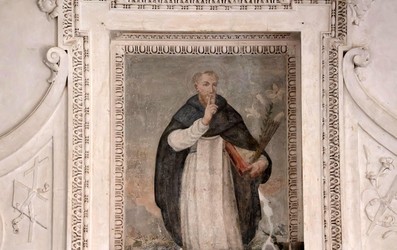
AUSP, November 2025. On Tuesday, 25 November, the Historical Institute of the Province of Hispania of the Order of Preachers organised the 3rd edition of the seminar ‘New historiographical trends in the study of religious orders’ at the Ateneo U. Sant Pacià (AUSP), in collaboration with the Pontifical University of St. Thomas Aquinas in Rome, the Faculty of History, Archaeology and Christian Arts Antoni Gaudí (FHEAG) and the Cultural History Research Group (GREHC) of the Autonomous University of Barcelona.
This meeting explored the renewal of historiographical sources and methodologies applied to the field of Church studies, promoting dialogue between historians and the updating of new perspectives.
Dr Alejandro López Ribao is vice-dean of the Antoni Gaudí Faculty and director of the Historical Institute of the Province of Hispania of the Order of Preachers.
What was the aim of this seminar?
First and foremost, and perhaps most importantly, to engage in dialogue and share ideas. Specialists from different fields participated, including leading academics and people from diverse backgrounds, with the aim not only of explaining a specific topic, but also of listening, contributing and collaborating in order to advance historical knowledge.
Who participated and what topics did they intend to address?
Continuing with what we have done in previous years, we wanted people from different institutions and fields to participate. In other words, people came from pontifical and ecclesiastical faculties, both Spanish and Roman, from faculties of theology or philosophy and other academic or research institutions in the civil world. We also wanted to invite people who have recently completed their doctorates. In other words, once again, we wanted our Antoni Gaudí Faculty, and also the Institute, to welcome all kinds of scholars from different institutions and different geographical locations.
What is your experience of previous seminars?
This is the third seminar. We started two years ago, and after this time we can say that the response has been very good. In fact, this year we have already started to receive requests to come to the seminar as moderators or to make presentations. Quite a few people have been waiting to see how it would develop, and others have asked what is planned for next year.
Which institutions are working on this topic?
Various institutions are taking part in this seminar, from the Angelicum and the Selesianum in Rome to our Antoni Gaudí Faculty, as well as the Autonomous University of Barcelona, the University of Barcelona, the University of San Dámaso in Madrid, the University of Comillas and the University of Navarra, and even the CSIC. In other words, a lot of institutions that are dedicated to the study of topics related to the history of the Church, and we believe it is important for them to sit down, talk, listen to each other and get to know each other, and for each one to contribute, from its own perspective, its way of dealing with these issues.
Do you plan to publish the results of the seminar?
As in previous years, we normally publish all the proceedings of this seminar in the Institute's journal, Archivo Dominicano, which is an open-access online journal.
What contribution does the Historical Institute of the Province of Hispania of the Order of Preachers make to the Church?
The specific contribution of our Institute is to help develop topics related to the history of the order in the different geographical areas where Spanish friars have had an impact. And this is the idea: to be able to assist research and dialogue, as well as to provide resources to researchers working on these topics.
What other projects does the Institute have?
We currently have two other projects. One, which is being carried out in collaboration with the CRAI at the University of Barcelona, is entitled: One among thousands and deals with female property marks in modern age books. We have organised it with different religious institutions and it aims to provide a specific insight into this phenomenon in Catalan female monastic communities. In a couple of months, we also have another project that will be carried out in Madrid, which we have organised jointly with the Institutum Historicum Ordinis Praedicatorum. It deals with the Masters of the Order who were Spanish, such as the Catalan Dominicans Fray Tomás Ripoll and Fray Joan Tomàs de Boixadors. Finally, we are also considering another project with the different Dominican provinces in Latin America, particularly Colombia, Mexico and Argentina.
And how do they relate to the charism of the order?
An essential part of the charism of the Order of Preachers is study; the dedication and work that helps man to reach the Truth, to reach God. In this sense, the Institute is another tool that the order offers to continue enlivening its charism.
Why do you think it should be done here and not at another institution or venue?
It is the most practical option because, after all, this is the only faculty in Spain where Church history is studied, and therefore we believe it is important that this type of seminar also be held at this faculty. Furthermore, the Institute's headquarters are in Barcelona. We could have organised it in other houses or institutions that the province has, such as in Madrid or Salamanca, but we decided to do it here precisely because, as Antoni Gaudí is a faculty dedicated to the study and history of the Church, we think that we should also help.
This academic year is important for the Antoni Gaudí Faculty because, since the inaugural lecture, which was held at the Sagrada Família, it has been planned to dedicate it to the Servant of God Antoni Gaudí, the architect whose 100th anniversary of his death will be commemorated on 10 June 2026. Is that correct?
Yes, that is correct. Since the beginning of the academic year, we have dedicated the entire year to Antoni Gaudí. There are many projects, not only conferences, but also talks, papers and publications that the faculty will dedicate to Antoni Gaudí... and we, at the Historical Institute, are also thinking about how we could collaborate within this Gaudí year, as it is also our duty as Dominicans to remember him.