
Convent statistics for Santa Clara de Vic
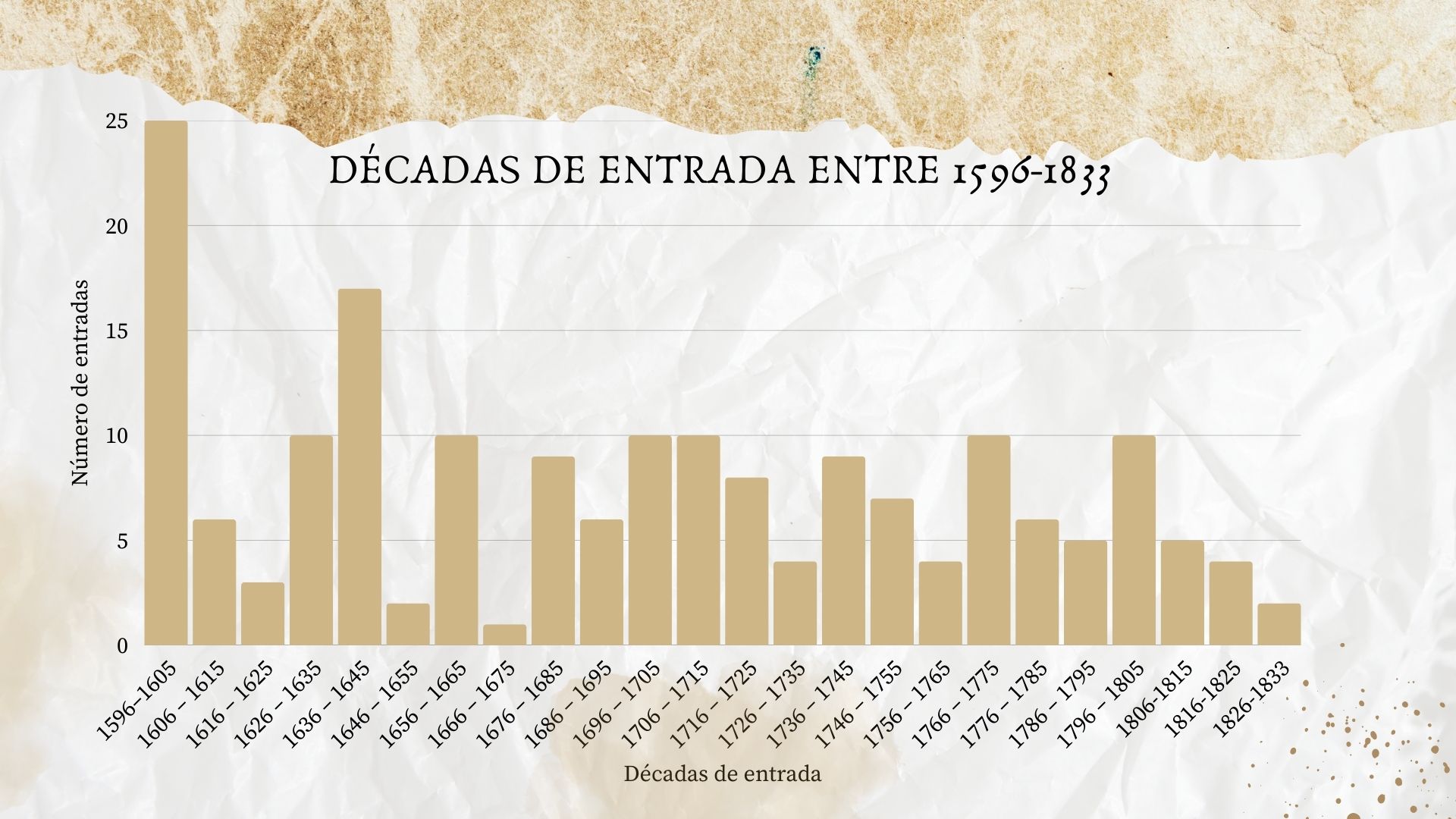
This first graph shows the number of nuns entering the convent grouped by ten-year intervals, starting in 1596. We can clearly see that the decades with the highest number of vocations were 1596–1605 and 1636–1645, both with very significant peaks. After these periods of strong growth, admissions stabilised at more moderate figures, between 5 and 10 nuns per decade. This indicates that the convent moved from an initial phase of expansion to a period of stability in terms of the incorporation of new nuns.
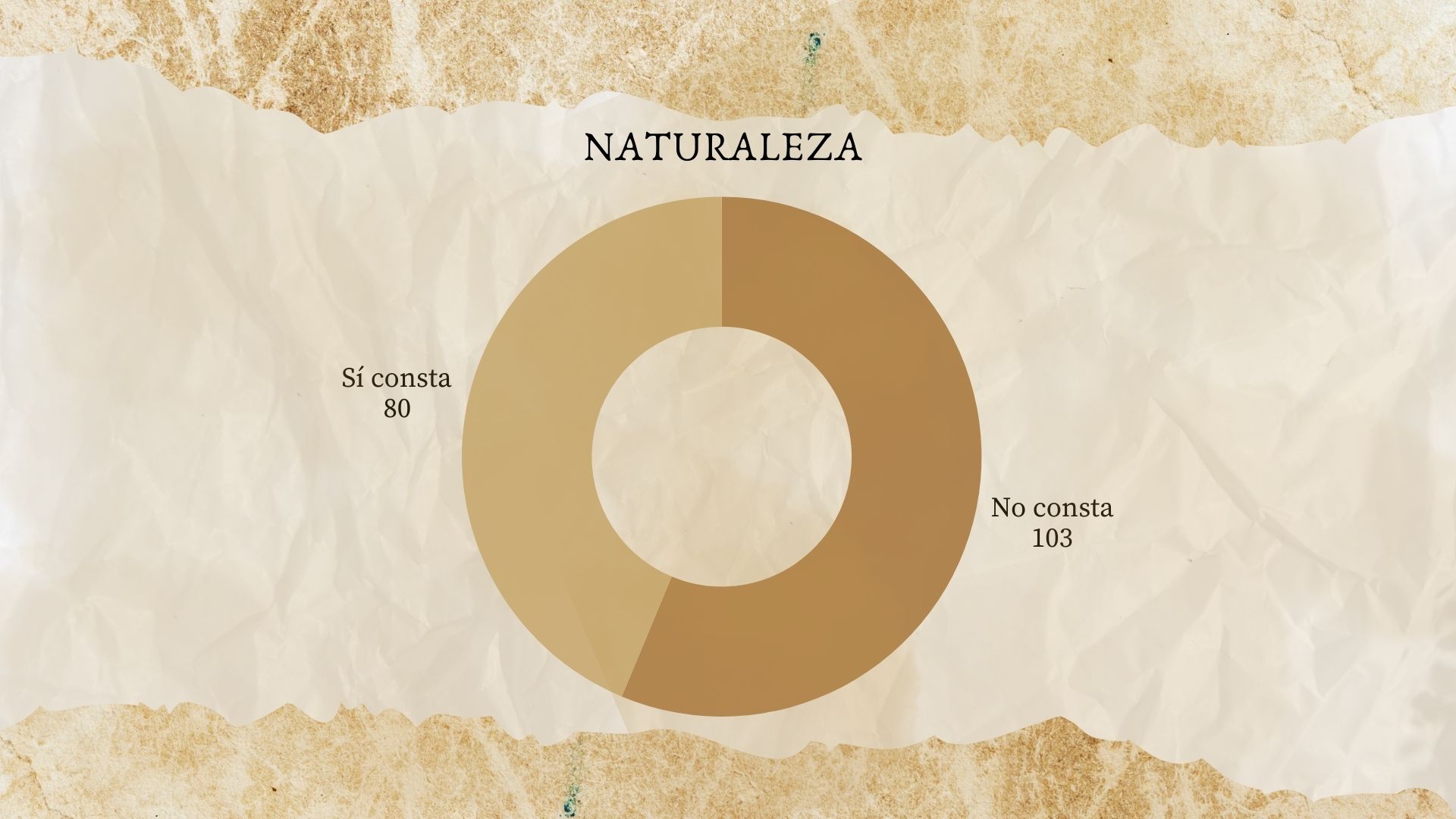
Here we see an initial analysis of the available information about the nature, that is, the origin, of the nuns. Of the 183 nuns registered, in 103 cases their place of origin is not recorded, while in 80 cases we do know it. This is important because it reminds us that we are working with incomplete historical documentation, something that was common in the 17th and 18th centuries.
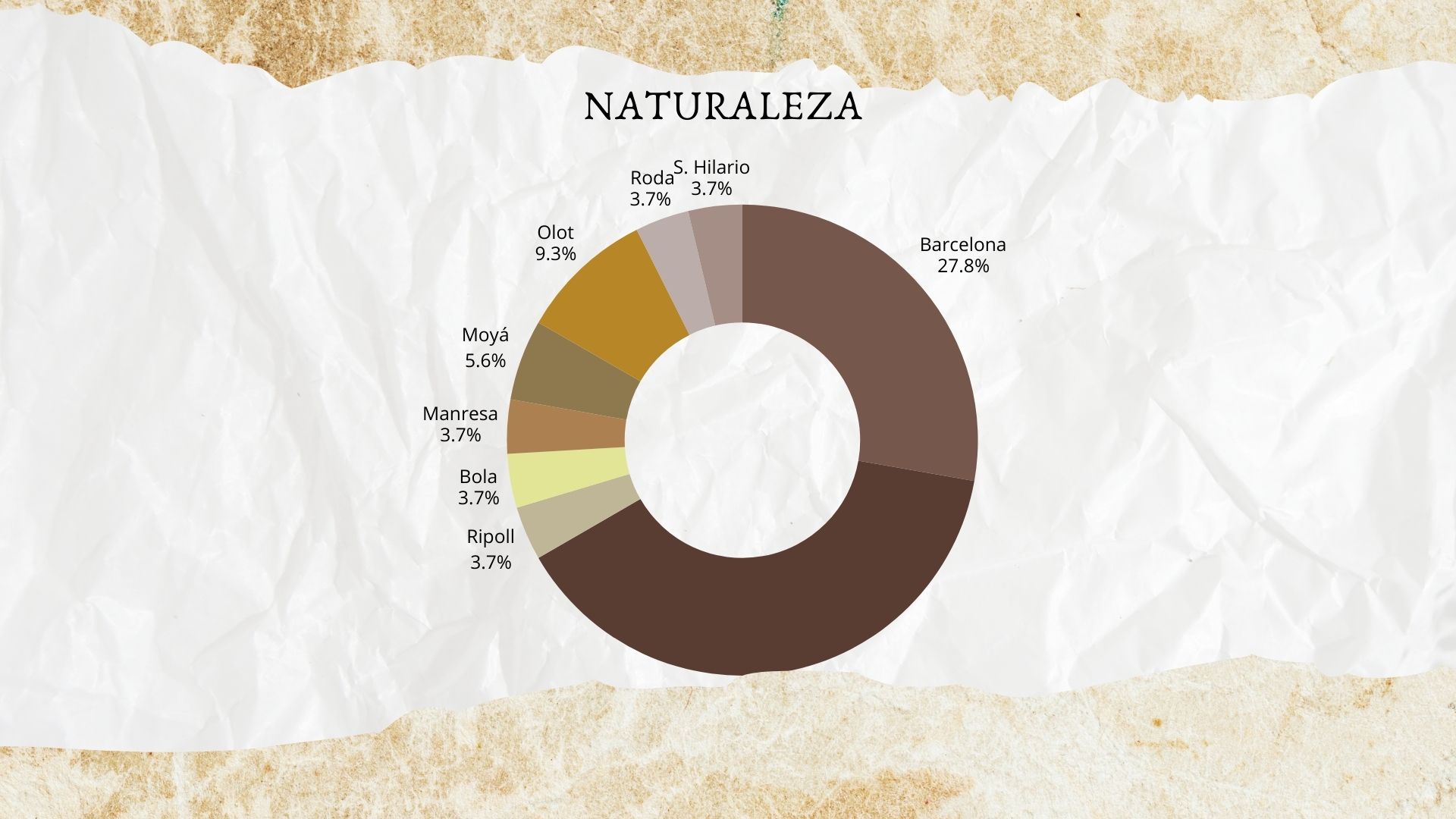

Among the cases where we do know the origin, we see that most come from Vic (38.9%), followed by Barcelona (27.8%). The rest of the places represent smaller percentages and come mainly from nearby municipalities, such as Olot, Moyà, Ripoll, Gurb, and Roda. This confirms that the convent had mainly local and regional influence, although it also received nuns from wider areas of Catalonia.
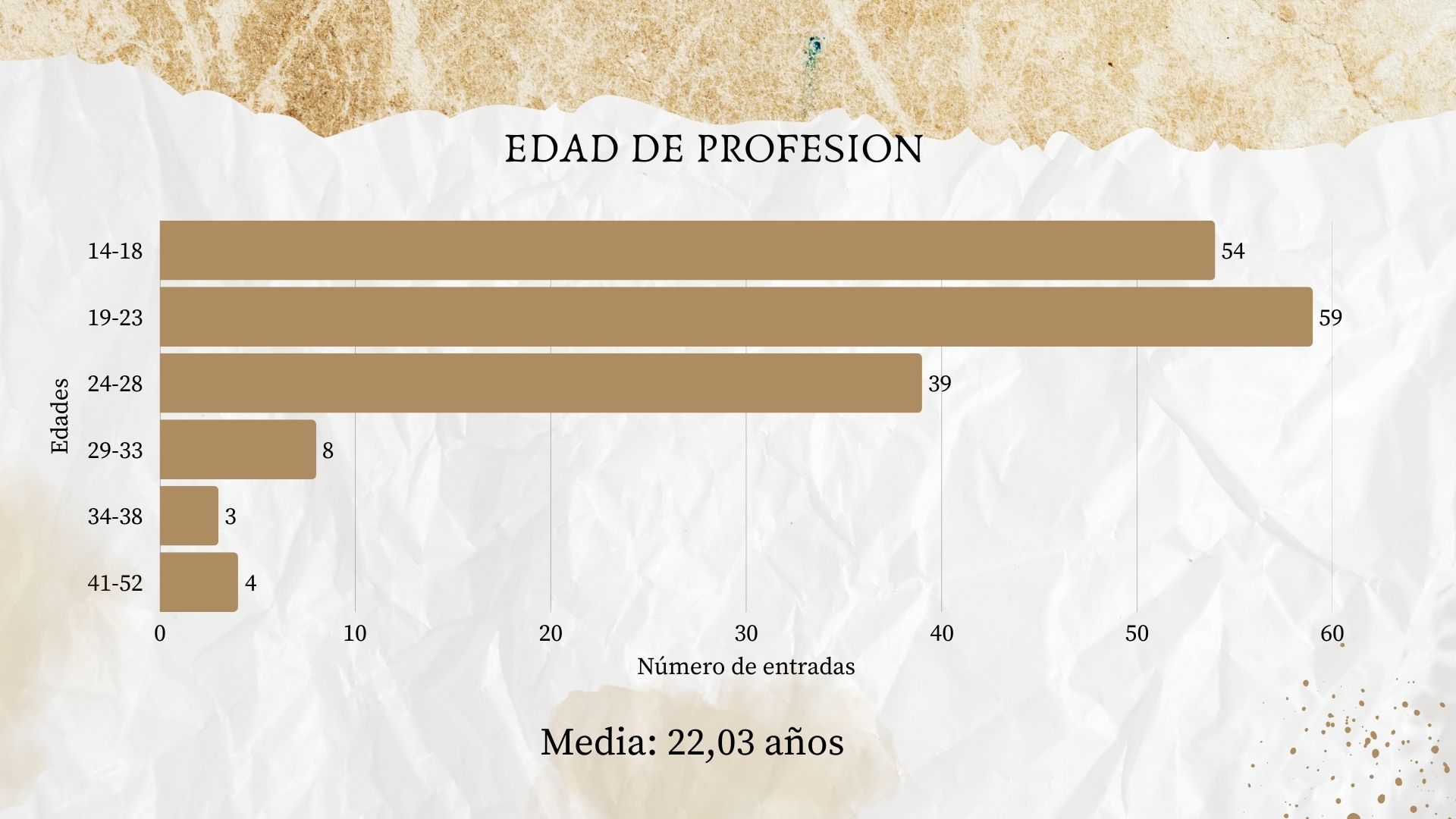
This graph shows the age at which nuns took their vows, that is, the moment when they made a definitive commitment to religious life. The average age is 22, which is consistent with the practices of the time: most entered as teenagers and took their vows between the ages of 18 and 25. However, there are also cases of women taking their vows at over 40 or even over 50, which may indicate late vocations or special life situations, such as widowhood or a search for stability within the convent.
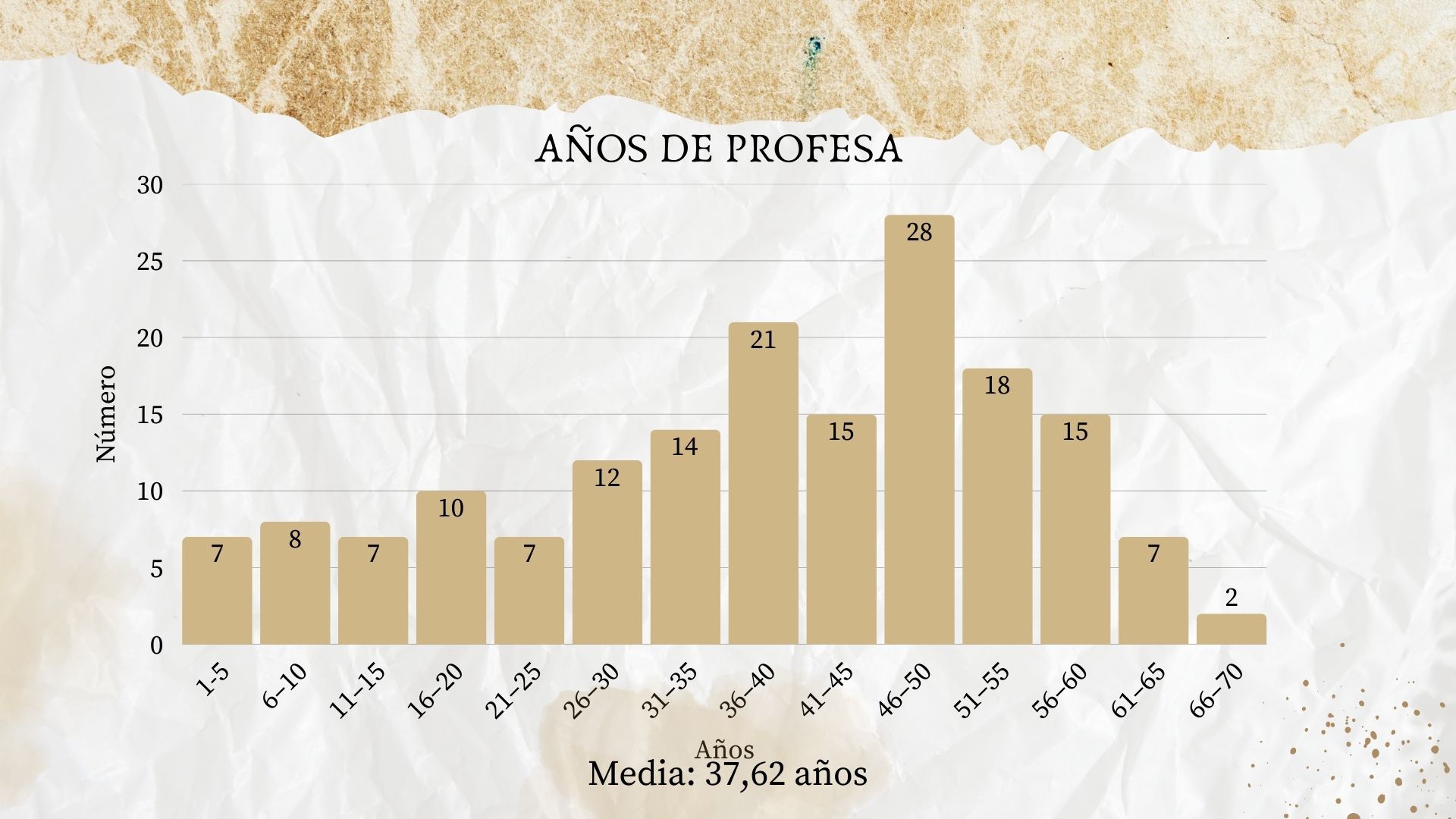
This graph shows how long the nuns remained in the convent. The average is 37.62 years, indicating that many nuns spent practically their entire adult lives within the community. In addition, there is a considerable group that exceeded 50 years of religious life, which was remarkable for the time.
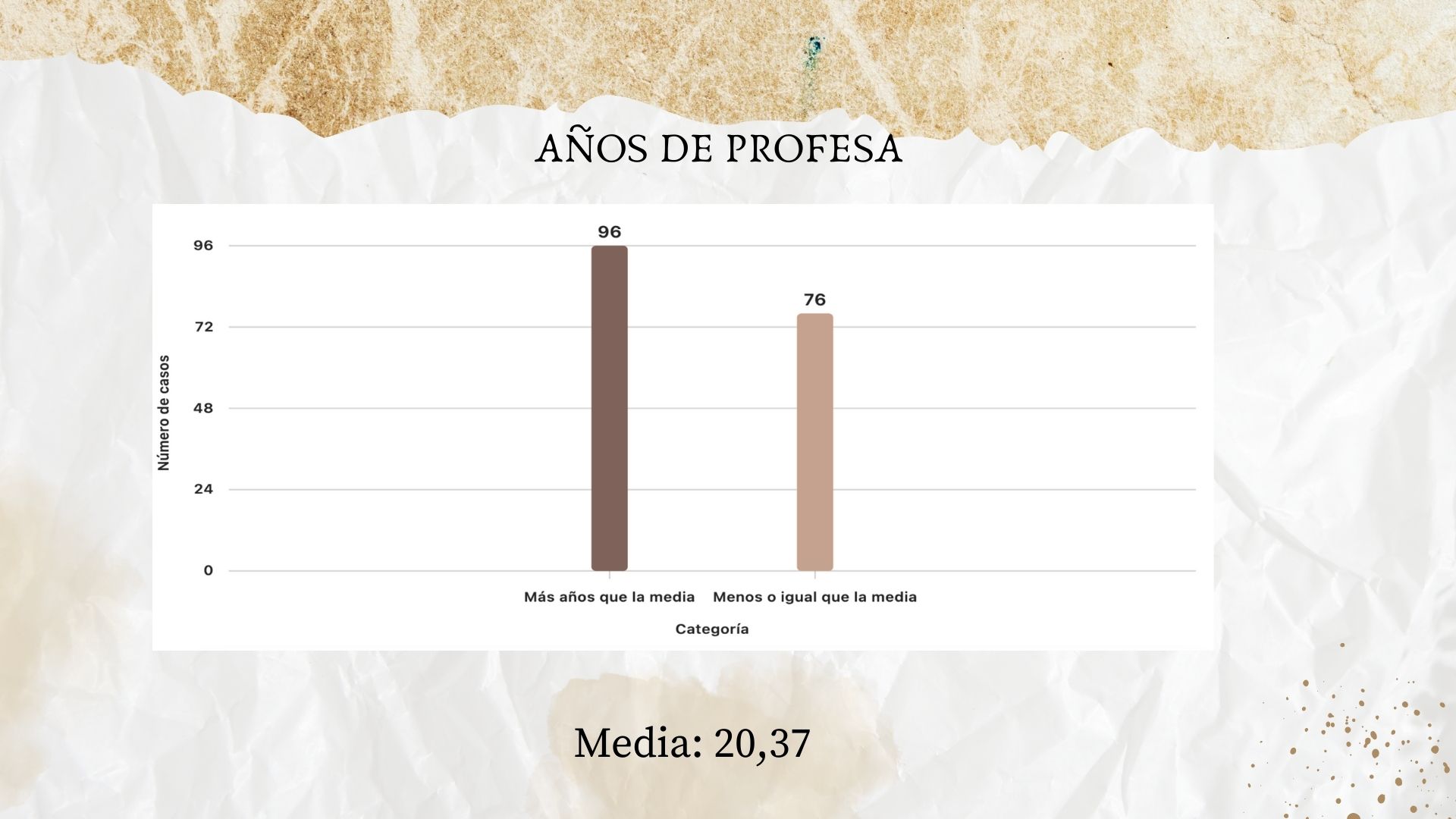
When dividing the nuns between those who lived longer than average in religious life and those who lived shorter lives, we see that 96 nuns exceeded the average, while 76 fell below it. This data reinforces the idea that a significant number of nuns enjoyed considerable longevity within the community.
